Yiling LiI am a first-year Ph.D. student in Electrical & Computer Engineering at Purdue University and a member of the Intelligent Imaging Lab (i2Lab) advised by Prof. Stanley Chan. My research focuses on advancing light-driven technologies at the intersection of nanophotonics and computational imaging. I am particularly interested in how nanoscale structures, material systems, and algorithmic models can be co-designed to control light through metasurface engineering and holographic display architectures for next-generation optoelectronic devices and display systems. I received my B.S.E. in Electrical & Computer Engineering from Princeton University with minors in Statistics & Machine Learning, Robotics, and Visual Arts. My undergraduate senior thesis on differentiable forward models for holographic display systems was advised by Prof. Felix Heide at Princeton Computational Imaging Lab. Beyond research, I enjoy tinkering with electronics, creating art, and learning dance choreography. Email / GitHub / Google Scholar / LinkedIn / Projects |

|
Research |
|
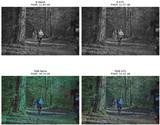
Differentiable Forward Models for Holographic Display SystemsYiling Q. Li, Congli Wang, Felix Heide Princeton Senior Thesis, 2026 poster / This study develops camera-in-the-loop (CITL) calibration and learned differentiable forward models to compensate for real-world optical imperfections in holographic display systems. By modeling hardware nonidealities such as aberrations, illumination variation, and detector noise, we improve hologram reconstruction quality without requiring physical hardware during optimization. |
|
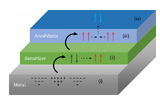
Plasmon-enhanced ultralow threshold solid-state triple fusion upconversionJesse A. Wisch, Kelvin A. Green, Amelie C. Lemay, Yiling Q. Li, Tersoo Upaa Jr., Evgeny Danilov, Felix Castellano, Barry Rand Nature Photonics, 2025 paper / We substantially improve the performance of upconversion films through excitation with surface plasmons that propagate along a planar silver-film interface, leading to an absorption enhancement that reduces the intensity threshold and enhances the external quantum efficiency. |
|
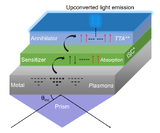
Plasmon enhancement for ultralow threshold triplet fusion upconversion with applications in white organic light emitting diodesJesse A. Wisch, Kelvin A. Green, Amélie C. Lemay, Yiling Q. Li, Tersoo Upaa Jr., Evgeny O. Danilov, Felix N. Castellano, Barry P. Rand Organic and Hybrid Light Emitting Materials and Devices XXIX SPIE, 2025 poster / This project addresses solid state disadvantages of triplet fusion upconversion by exciting an upconversion film using the concentrated electric field of planar surface plasmon polaritons, demonstrating reductions in optical power threshold. |
|
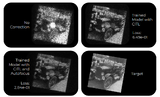
Learnable optical model for hologram correctionYiling Q. Li, Yu Wu, Chenkai Mao, Sara Azzouz, Jonathan A. Fan Stanford University Electrical Engineering REU Final Presentation Day, 2025 poster / slides / We investigate camera-in-the-loop (CITL) computer-generated holography (CGH) for 3D nanoscale printing in photosensitive resin by training neural networks to compensate for optical aberrations in a 4f metasurface–spatial light modulator optical system. We further correct for speckle, pixel cross-talk, and zeroth-order light to improve agreement between simulated and experimental holograms. |
|
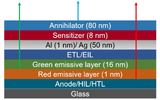
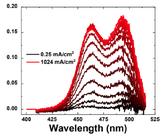
Ultralow threshold triplet fusion upconversion enabled by surface plasmon field enhancementJesse A. Wisch, Kelvin A. Green, Amelie C. Lemay, Yiling Q. Li, Tersoo Upaa Jr., Barry P. Rand Organic Electronics and Photonics: Fundamentals and Devices IV SPIE Photonics, 2024 video / While solid-state upconversion systems promise applications in solar cells, photoredox catalysis, and bioimaging; most require tremendous optical power to achieve maximum upconversion efficiency. In this work, we lower this required optical power by using the concentrated electric field of surface plasmons generated from an organic light emitting diode. |
|
Plasmon enhanced light-mediated chemical processesYiling Q. Li, Tersoo Upaa Jr., Jesse A. Wisch, Barry P. Rand Andlinger Center for Energy and the Environment Annual Meeting, 2023 poster / In this study, we optimize the dielectric and acceptor layers of organic light-emitting diodes (OLEDs) to increase the efficiency of triplet-triplet annihilation photon upconversion (TTA-UC), a process that converts two low-energy photons into one higher-energy photon. |
|
Last updated: July 27, 2026 | Design and source code from Leonid Keselman's fork of Jon Barron's website |